Blogs
What's New Trending

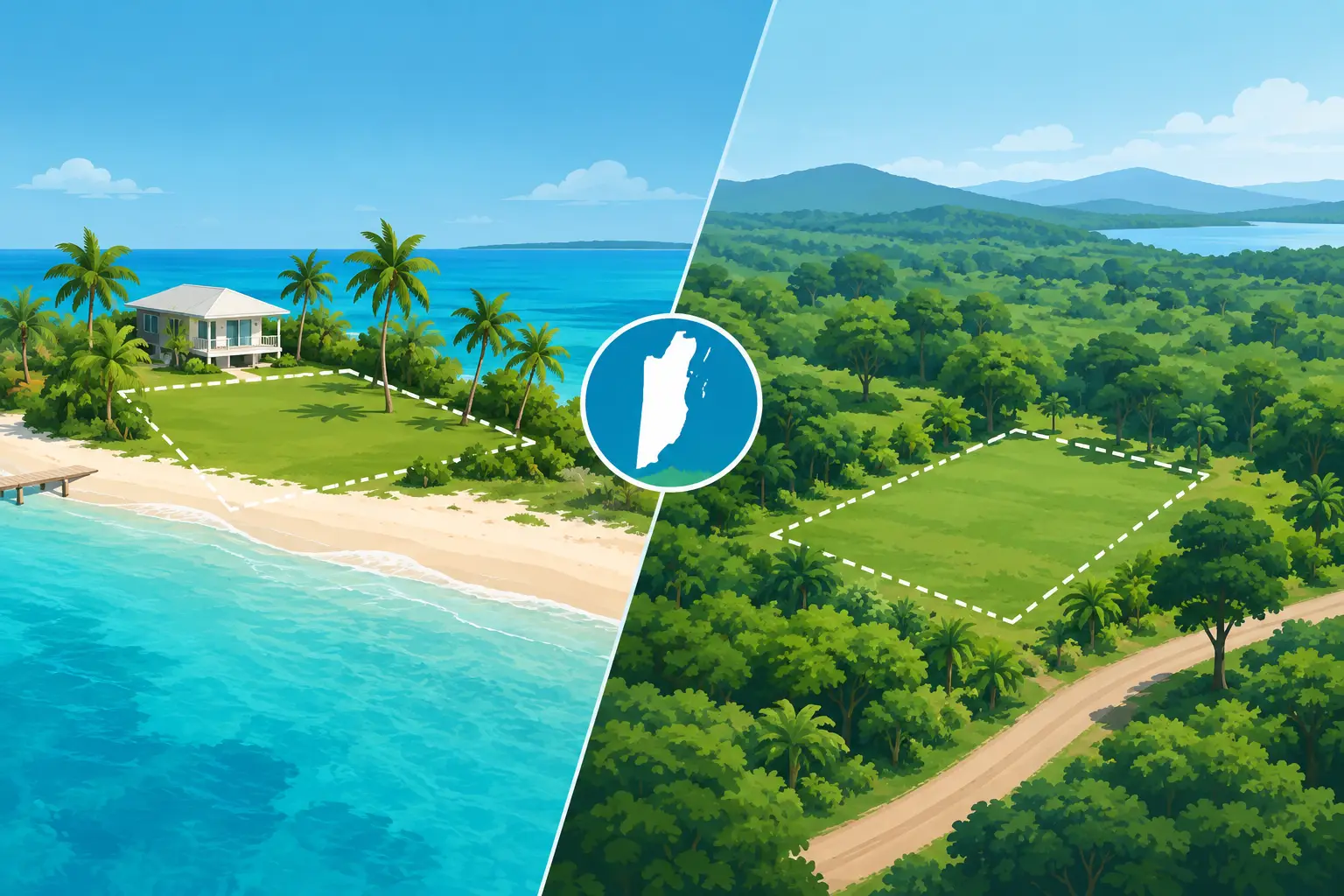
A lot can look perfect from a listing photo and still be the wrong fit for the way you plan to use it. When considering beachfront lots versus inland property in Belize, the real question is not simply whether you want to see the Caribbean from your porch. It is whether the location, budget, access, building plan, and long-term goals all work together.
Around Hopkins, Sittee Point, and Sittee River, buyers can find appealing opportunities on the beach, near the lagoon, along the river, and a short distance inland. Each setting offers a different version of Belize living. The best choice depends on whether you are building a personal escape, a retirement home, a vacation rental, or a larger investment.
Beachfront land has immediate emotional appeal. You can walk out to the sand, hear the water, and offer guests the Belize experience many travelers come looking for. For an owner planning a vacation rental, boutique lodging, or a second home used by family and friends, that direct connection to the sea can be a meaningful advantage.
But beachfront is not automatically the better investment, and inland does not mean isolated or less desirable. A well-located inland lot close to Hopkins Village, Sittee River, or the beach can offer more space, easier construction planning, and a lower entry cost. It may also suit buyers who expect to live in Belize full-time and care as much about neighborhood character, privacy, gardens, and day-to-day convenience as they do about a water view.
Before narrowing your search, be clear about the property’s primary job. A rental-focused purchase, a quiet retirement home, and a future family compound should not be evaluated by the same standards.
Beachfront lots generally command a premium because shoreline is limited. In established coastal areas, the price reflects not only the land itself but also direct beach access, views, rental appeal, and scarcity. If your budget allows for beachfront, that premium can make sense, particularly when the property has usable frontage, dependable access, and a location guests recognize.
Inland land often gives buyers more flexibility for the same investment. You may be able to purchase a larger parcel, choose a lot with mature trees, or reserve more of your budget for construction, furnishings, solar, landscaping, or a pool. For buyers who want a comfortable, well-built home rather than the smallest possible house on the beach, this trade-off can be compelling.
The important comparison is the total project cost, not just the asking price. A lower-priced parcel that needs extensive filling, road work, utility extensions, or drainage improvements may not remain the lower-cost option. The same is true of beachfront land, where elevated construction and coastal-grade materials may be part of a sensible building plan.
Living near the Caribbean is rewarding, but it asks more of a property owner. Salt air, wind, heavy rain, and seasonal weather affect construction choices and ongoing maintenance. Buyers should expect to plan carefully for foundations, drainage, roofing, windows, corrosion-resistant materials, and insurance considerations.
A beachfront parcel also deserves a close look at elevation, erosion patterns, vegetation, and the distance between the planned home and the active beach. The view matters, but so does how the land performs after a strong rain or a high-water event. Good local advice can help you understand what is normal for a specific area and what may require added expense or caution.
Inland lots are not free of site considerations. Low areas can hold water, road conditions can vary, and access may change between dry and rainy seasons. Still, many inland locations are easier to landscape, may offer better shelter from coastal winds, and can create a more private residential setting.
A parcel shown as “near the beach” may be only a few minutes away – or it may involve a road that changes the experience completely. Visit the property if possible, and assess the route from the main road, village services, grocery shopping, restaurants, medical care, and the airport connection. A short distance on a map does not always equal simple daily access.
Ask practical questions about road maintenance, legal access, electricity availability, water source, internet options, drainage, and septic planning. These details affect both your enjoyment and the property’s resale appeal. Buyers planning to rent should pay special attention to guest arrival, parking, luggage access, and whether the home will be easy to find after dark.
Beachfront properties can have excellent access, especially near established communities, but every parcel is different. Inland properties sometimes provide a more straightforward connection to utilities and public roads. In other cases, a seemingly remote beach lot may be well-served while an inland parcel requires more infrastructure work. There is no substitute for evaluating the individual property.
For short-term rentals, beachfront usually has an obvious marketing advantage. Visitors respond to direct beach access, sea views, and the ability to step outside into the sand. A well-designed beachfront home can attract strong interest, particularly if it combines privacy with convenient access to Hopkins and nearby activities.
That said, inland homes can perform very well when they offer a clear reason to book. A stylish home near the beach with a pool, generous outdoor living space, secure parking, reliable internet, and a peaceful setting may appeal to guests who want comfort without beachfront pricing. Riverfront and lagoon-adjacent homes can also provide a distinct experience for travelers who value wildlife, kayaking, boating, and quiet surroundings.
Do not buy based on rental assumptions alone. Estimate realistic occupancy, cleaning, maintenance, management, utilities, repairs, and off-season demand. The property that earns the highest nightly rate is not always the one that produces the best net return.
Many buyers begin with the dream of waking up on the beach. After spending time in the area, some decide they would rather be a short walk or drive from the water, with more room for a garden, pets, guests, or a workshop. Others realize that being directly on the beach is exactly what they want and are comfortable with the added cost and maintenance.
Beachfront living puts you close to the activity of the coast. Depending on the location, that may mean more people passing by, more wind, and less privacy. Inland properties can feel more residential and relaxed, especially for full-time residents. They may also place you closer to local neighbors, schools, services, or the river.
There is also a middle ground worth considering: a lot just off the beach, ideally with simple access to the shore. These properties can offer much of the coastal lifestyle while reducing the purchase premium and some of the exposure that comes with being directly on the water.
Whether you choose beachfront or inland, verify title, boundaries, access rights, restrictions, taxes, and the actual condition of the land before committing. Survey information, neighboring development, easements, and intended use all matter. If you plan to build, speak with qualified local professionals about site preparation and realistic construction costs early in the process.
This is where experienced local representation is especially valuable. Belize Tropicool Realty helps buyers look beyond the listing description and consider how a property will work in real life – from access and neighborhood context to resale potential and building practicality.
The right lot should support the Belize life you picture, not force you to compromise on it. Spend time in the area, walk the property, ask direct questions, and let your intended use guide the decision. The best view is valuable, but the best fit is what makes a property worth owning for years to come.